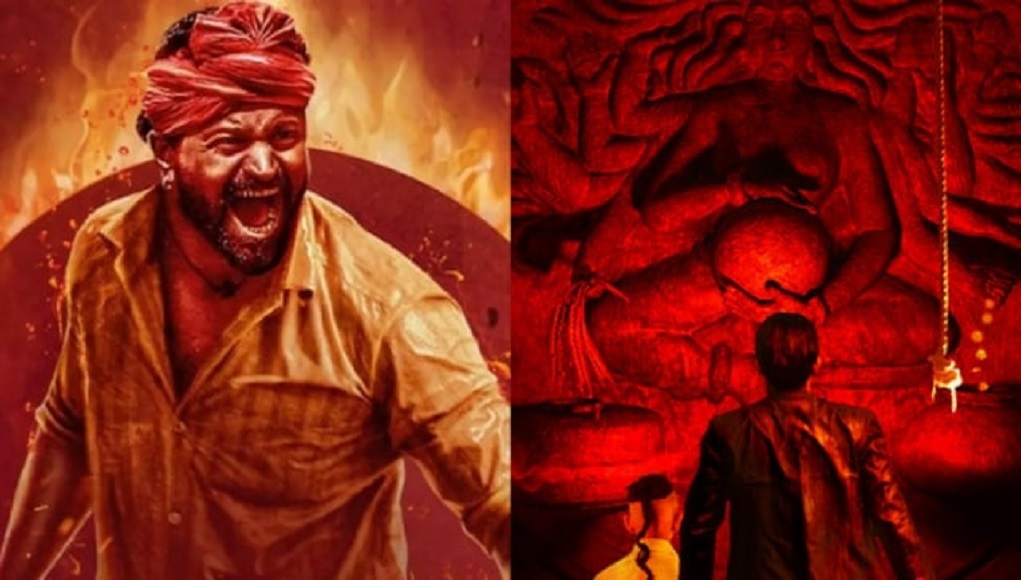
Anand Gandhi, who functioned as the creative director for the 2018 period horror film Tumbbad, got himself into trouble over the weekend for his remarks on the Kantara, a film directed by Rishab Shetty. Gandhi found it offensive when people linked Tumbbad to Kantara because he believed it represented a “glorification of toxic masculinity.” Shiva, the main character of Kantara, is a hypermasculine, hunting, flesh-eating Kambala player who turns out to be the protector of his town and the tribal people. The scene in Kantara where Shiva invades Leela’s privacy while she is taking a bath received the most criticism for being disrespectful. When Leela returns from her training, Shiva nips at her hips on another time.
At first, the overt misogyny in Kantara is unsettling. Many spectators and reviews found it unsettling. Perhaps the film’s climax obscured these troubling scenes, which might have potentially caused widespread outcry. Shiva’s shift from debauchery to enlightenment needed to be established, some people claimed in response to Gandhi’s tweet on the subject.
Here, it’s crucial to emphasise that Kantara is set in the 1990s. It is based on the experiences of locals who reside in a Mangalorean jungle remote from populated areas. Expecting a historical drama to support gender equality and progressive ideals isn’t altogether unreasonable. Gay characters have appeared in shows like Stranger Things, Lord of the Rings: The Rings of Power, and House of the Dragon, all of which are set in a much earlier era and support women’s rights. But because these concepts are so novel and weren’t as common in the era these movies were set in, incorporating them into historical plays can be challenging for any director. Understanding that a Shiva would squeeze Leela’s hips
Besides, the misogyny and hyper-masculine traits of Shiva – like hunting animals, eating their flesh, smoking ganja play a key role in making Kantara’s climax impactful. One simply could not have expected Shiva, who wore ganjis with his chest hair popping out and came across as a heterosexual cisgender man, to shave off his beard and don the costume of a Kola dancer in the climax. The shock of seeing Shiva dressed as a Kola dancer and eventually running off into the forest in the final scene made Kantara’s climax so beautiful. The blatant display of misogyny and toxic masculine traits in Kantara serve a larger purpose in the grand scheme of things. It is these traits which make Shiva’s transformation – his journey from debauchery to enlightenment – impactful.
Besides, why can’t filmmakers write problematic male characters? If a male character is a) too good to be true or b) problematic with no redeeming qualities, the Left would criticise the filmmaker for not writing gray characters who are layered and have shades of both good and bad. But the moment a filmmaker writes a character like Shiva who is problematic in the way he treats Leela but also protects his land and its people, the filmmaker is accused of celebrating toxic masculinity. “If filmmakers are expected to constantly answer for the worst things their audiences might ever think, no art of value would ever get made,” said film critic Emily VanDerWerff on Quentin Tarantino’s Once Upon a Time In Hollywood. Why should the filmmaker be held responsible for what their audience might do after stepping out of the theater? Since when did filmmakers become the gatekeepers of society? Why are we holding them accountable and answerable for every good and bad thought that crosses the mind of their audience? This is the same school of thought which once argued that violent video games lead to an increase in violence. The controversy around the film The Joker in light of an increase in the mass shootings in the US ignited a heated debate on the same.
If we expect our filmmakers to not portray anything slightly problematic, how will they ever be able to push the envelope and make great art? Why are we constantly policing writers and directors and calling them out publicly if they make anything that can be construed as being slightly sexist or misogynist? If this continues, soon all filmmakers will be issuing apologies on a daily basis and making substandard films with no complex characters. In a time when the Indian film industry is struggling to survive, we need to encourage our filmmakers to innovate and experiment with new stories and genres – of course not at the cost of turning a blind eye to misogyny unless it is absolutely necessary for the larger plot of the film, as was the case with Kantara.
Art is intended to be individualised, to push limits, and to provoke thought. No work of significant worth will be produced in the near future as we push our filmmakers to be politically correct and have their scripts reviewed by legal teams to avoid blowback.
An entertainment, pop-culture, and trends writer located in New Delhi is named Deepansh Duggal. He focuses on writing opinion pieces about sociopolitical and gender issues in the entertainment and show business industries. In addition, he occasionally evaluates OTT shows and offers explainers. At @Deepansh75, he tweets.